The 8 Apps I Replace First on Any New Android Phone — and What I Use Instead
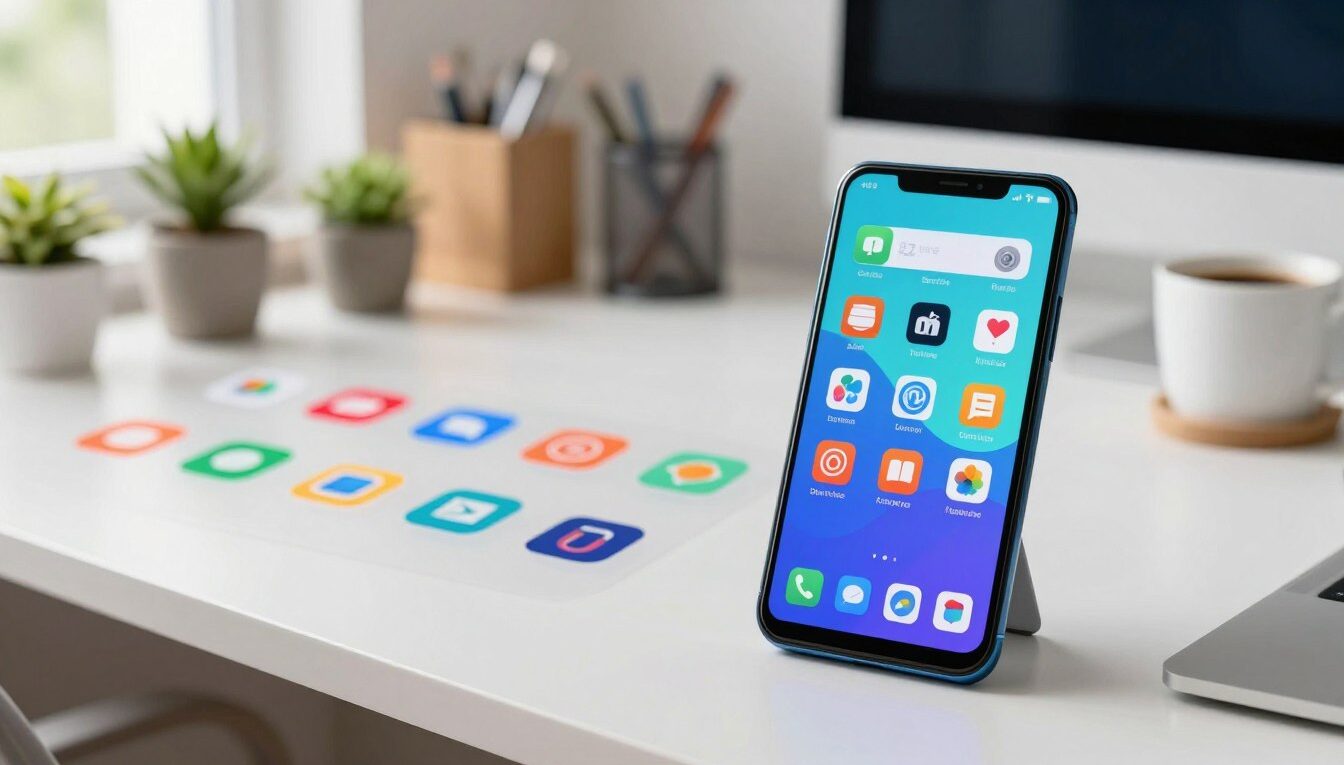
Setting up a new android phone is more than installs. It is a rebuild of daily flow. Restoring accounts helps, but settings, automations, and file access matter most.
This guide is a practical checklist of the first apps to replace on new android phone so you can get routine back fast. I swap defaults and OEM bloat for stronger tools that cut friction during setup and the first week.
I’ll preview eight core swaps with one-line outcomes: password manager (quick logins), unified search (find everything), second brain (notes and clips), automation (tasks run themselves), notification control (fewer pings), sharing (fast transfers), file manager (easy access), and texting/RCS (reliable messages).
These choices sit ahead of social media because they unlock logins, reduce taps, tame alerts, and keep data moving across devices. The list targets U.S. compatibility and mixed Windows/Mac setups.
Why I replace apps before I download social media on a new Android phone
Kicking off a setup with productivity tools saves hours later spent fixing routines. The real cost of a fresh device is lost time rebuilding how you find things, log in, and move files.
Restoring account data gets you signed in. Rebuilding workflows gets you working. Search habits, capture systems, automations, notification rules, and file paths usually need manual tweaks. Those tweaks take longer than downloading feeds.
What I mean by “swap”
Swap means three concrete moves: change defaults (SMS, keyboard), remove OEM duplicates, and pick best-in-class options from the play store. Sometimes it means keeping a default but adjusting its workflow, like changing Photos backup rules.
A simple decision filter
- If an app helps you log in, find content, capture notes, move files, or cut interruptions—install first.
- Social media is easy to add later and often distracts from finishing setup.
- Each following section will list what to download, 1–2 settings to flip, and the immediate benefit you should feel.
| Task | Restore Data | Rebuild Workflow |
|---|---|---|
| Sign-ins | Restore accounts and passwords | Enable autofill and a strong password manager |
| Search & access | Install search-capable apps | Set a unified search launcher and favorites |
| Notifications | Keep default notifications | Create rules that reduce interruptions |
| Files | Reconnect cloud accounts | Install a file manager and set sync paths |
First apps to replace on new android phone for security and logins
Start by securing access: the right credential tools make setup seamless.
Install a password manager before installing social or media accounts. A strong password vault unlocks bank logins, delivery services, and any account that blocks setup without credentials.
Password manager swap: 1Password vs Bitwarden, Dashlane, and Proton Pass
1Password acts as a central key for logins, bank details, IDs, and secure notes. It uses a Master Password plus Secret Key for strong protection and smooth UX.
Bitwarden is free and open-source; you can self-host for portability. Dashlane adds password-changing tools. Proton Pass links into the Proton privacy ecosystem and supports aliases.
| Service | Strength | Best use | Notes |
|---|---|---|---|
| 1Password | Polished UX, Secret Key | Individuals, families, teams | Great cross-device syncing and shared vaults |
| Bitwarden | Open-source, self-host | Users who value portability | Free tier with premium options |
| Dashlane | Auto-change passwords | Users who want automated updates | Extras for convenience |
| Proton Pass | Privacy-focused, aliases | Proton ecosystem users | Good for email-linked workflows |
Turn on Autofill right away
Enable Android Autofill so each login takes seconds. Autofill reduces typing and speeds overall onboarding by filling usernames and passwords when apps ask for them.
Add a 2FA authenticator early: Ente Auth as an Authy alternative
Install Ente Auth and import existing tokens. Configure export or recovery so you do not get locked out during device switches.
Authy removed its desktop apps in 2024, which changed many cross-device workflows. Ente is open-source and end-to-end encrypted, making it a solid multi-platform option for 2FA.
- Install a password manager, add vault entries for banking and email.
- Enable Autofill in settings for quick logins and reduced typing.
- Install Ente Auth, import tokens, and confirm a recovery method.
Use unique passwords, keep secure notes for IDs, and treat 2FA plus a vault as the foundation that protects all other data on your devices.
Replace your launcher search with Pixel Search for faster on-device access
Reducing friction starts with a search that finds apps, settings, and conversations instantly.
Pixel Search began as the Pixel Launcher search and now works as a unified search layer on many devices. It shrinks the number of taps and keystrokes needed to reach what matters. You can open an app, jump into Wi‑Fi settings, or start a WhatsApp conversation straight from results.
Why unified search matters
One bar replaces hunting through an app drawer or long settings lists. That saves time when you are still configuring the device and installing many apps.
It also acts as a productivity multiplier: quick access speeds up messages, notes, and automations because you land in the right spot faster.
Quick setup flow
- Install Pixel Search early from the Play Store and grant required permissions.
- Test queries: “Wi‑Fi”, “Bluetooth”, and a frequent contact or conversation.
- Tweak privacy and indexing settings so it surfaces contacts and settings you use most.
| Action | Why it helps | Expected payoff |
|---|---|---|
| Install & grant permissions | Allows quick indexing of apps, contacts, and settings | Search returns results immediately |
| Test key queries | Confirms access to settings and conversations | Fewer taps and less scrolling |
| Adjust indexing | Limits noise from unused items | Cleaner, faster results that match daily use |
Replace scattered notes and reading tabs with NotebookLM as your “second brain”
Store research, screenshots, and reference documents in one place so they actually help you later.
Reframe notes as a knowledge system rather than loose bookmarks. NotebookLM acts as a central hub for research, writing, and decision support.
What to capture
- Save links from articles, news clippings, and helpful posts.
- Upload PDFs, screenshots, exports, and other files for quick lookup.
- Keep receipts, migration checklists, and device documentation where they are searchable.
Why the AI matters
NotebookLM uses AI grounded in your uploads. It summarizes sources and answers questions based on your data, which cuts hallucinations compared with generic chat assistants.
Daily workflow
Create a few projects — Work, Personal Admin, Health/Finance, Learning — and add new material each day. After installing social later, use NotebookLM as the inbox for anything worth keeping from a feed.
| Action | Why it helps | Result |
|---|---|---|
| Capture links & PDFs | Avoid re-searching | Faster research |
| Use grounded AI | Reduces fabrication | Trustworthy summaries |
| Daily add habit | Builds organized data | Reliable research experience |
Replace repetitive taps with MacroDroid automations
MacroDroid turns repetitive taps into silent routines that save minutes every day. It acts as a practical automation layer that removes small frictions you notice right away when setting up a new android device.
Set up “set it and forget it” routines that run in the background
Routines trigger from location, time, app open, or connectivity and run quietly. That means fewer decisions and fewer taps during the busy first week.
Smarter screen behavior: auto-rotate and display rules
Create rules that rotate the screen only for video players and keep rotation off for reading apps. Use display timeout macros tied to battery level or charging state.
Contextual texting shortcuts like “on my way” messages
Make a macro that sends an “on my way” text when you leave a saved location or pair with car Bluetooth. It’s a small thing that prevents missed updates and saves time.
- Start small: build 2–3 high-impact macros first.
- Document and export your macros so you won’t lose them when you switch devices.
- Track outcomes: fewer taps, fewer missed actions, and a smoother setup week.
| Use case | Trigger | Expected payoff |
|---|---|---|
| Auto-rotate by app | App open (video or reader) | Correct screen orientation without toggling |
| Display timeout rules | Battery level or charging | Balanced battery and usability |
| Contextual “on my way” text | Leave location / Car Bluetooth connect | Less manual messaging, timely updates |
Replace noisy notifications with BuzzKill rules
A better notification strategy protects focus and keeps essential alerts visible.
Most people get dozens or hundreds of alerts each day. Toggling a few notifications off rarely fixes the pile-up. The result is missed messages and constant interruption.
BuzzKill acts as a notification rules engine. It offers automation-like logic for each app and contact. Use it to silence repeats, bundle low-priority alerts, and resurface important items when you can act.
High-value rules that matter
- Auto-silence repeated pings from group chats for a set period.
- Bundle promotional or low-priority updates so they appear as one digest.
- “Remind me again” for critical contacts or work app alerts after a delay.
These rules cut interruptions while keeping receipts and shipping updates visible. You can trim ad-like clutter from shopping and media without losing account alerts.
Setup suggestion: configure BuzzKill immediately after installing core communication apps. That prevents noise from ramping up as you add services and keeps your day focused.
| Problem | BuzzKill option | Benefit |
|---|---|---|
| Endless repeat pings | Auto-silence after X repeats | Fewer interruptions, calmer workflow |
| Promotional clutter | Bundle into digest | Less noise, still see receipts |
| Important messages buried | Remind-me rules for contacts/apps | No missed critical alerts |
Replace clunky sharing options with LocalSend for cross-device file transfers
Cross-device transfers become a chore when each gadget expects a different tool or account. LocalSend fixes that by letting you move files across phones, laptops, and tablets without cloud uploads or cables.
Send files between Android, iPhone, Windows, and Mac on the same Wi‑Fi network
Open LocalSend on each device connected to the same network. Tap a file or folder, choose a nearby device, and send. Transfers are fast and stay inside your local network, so you avoid slow uploads.
Why LocalSend beats cables, Bluetooth, and account-based services
It is faster and more reliable than Bluetooth for most sizes of files. No cables, no waiting for a cloud sync, and no account sign‑ups that add friction.
- Mixed ecosystems are common in U.S. homes — an Android phone plus a Windows laptop or a Mac — and default tools often fail to bridge them cleanly.
- LocalSend works across devices by using the local network and simple pairing. Send photos, PDFs, folders, or text snippets with a couple taps.
- Transfers are encrypted and peer-to-peer, so your data never routes through third‑party servers.
Quick setup checklist
- Install LocalSend on each device and allow local network access.
- Test with a photo and a PDF to confirm speed and destination folder.
- Note the download location for each device so you can find received files later.
| Problem | LocalSend solution | Why it matters |
|---|---|---|
| Cable juggling | Wireless local transfer | No hardware required; faster workflow |
| Slow Bluetooth or pairing issues | Wi‑Fi transfers with higher throughput | Fewer failed transfers; handles large files |
| Account-based cloud friction | No accounts; direct transfers | Immediate transfer without cloud upload delays |
| Privacy concerns | Encrypted peer-to-peer | Data stays local and private |
Replace basic file browsing with Solid Explorer for files, cloud drives, and NAS
Missing a PDF or ID during setup often stalls verification; the right file tool prevents that pause.
Default browsers handle downloads but struggle with multi-location workflows. They rarely show cloud, NAS, and phone storage side by side.
Manage phone storage plus Google Drive, OneDrive, and network locations in one app
Solid Explorer connects local storage, Google Drive, OneDrive, and SMB/NAS shares so you stop juggling multiple services. That central view keeps critical data reachable during migration.
Keep your data accessible during setup
During a device switch you may need scanned IDs, tax PDFs, or work documents immediately. Solid Explorer centralizes those items so verification, installs, and account restores do not wait.
Connect three locations first: phone storage, your main cloud drive, and any NAS paths used for family or backups. This order fixes the common “where did that save?” problem fast.
| Location | Why connect | Immediate benefit |
|---|---|---|
| Local storage | Fast access to downloads and scans | Quick attachments and restores |
| Google Drive / OneDrive | Central cloud documents | No re-downloading from other devices |
| NAS / Network | Shared family or work folders | Consistent backups and media access |
Replace default texting with Google Messages to enable RCS
Your messaging app shapes how you share photos, coordinate groups, and stay in touch.
RCS benefits: higher-quality media, typing indicators, and upgraded group chats
RCS upgrades SMS/MMS limits. It sends higher-quality media, shows typing indicators, and makes group chats behave like modern messaging services.
This means fewer broken photo uploads, clearer delivery receipts, and group threads that handle reactions and read status better.
Privacy and encryption: what’s end-to-end encrypted (and when)
Google Messages supports end-to-end encryption for both one-on-one and group RCS chats when both parties use RCS with compatible settings.
Encryption depends on compatibility. If a recipient falls back to SMS or an incompatible client, messages revert to less secure transport.
Optional messaging upgrades
Consider one additional service based on needs:
- Telegram — multi-device sync and cloud backups.
- Signal — focused on strong privacy and minimal metadata.
- Discord — best for community servers and ongoing channels.
- Beeper — aggregates several services into one inbox via local bridges on your device.
Quick setup mini-guide
- Install Google Messages and open it.
- Set it as the default SMS app when prompted.
- Watch for the RCS enable prompt and confirm RCS is active in settings.
| Problem | Solution | Result |
|---|---|---|
| Low-quality media | Enable RCS via Google Messages | Better photo/video transfers |
| Missing typing or read cues | RCS-enabled conversations | Clearer presence and delivery info |
| Multiple chat services | Keep Messages for SMS/RCS, add one extra service | Balanced coverage without fragmentation |
Practical strategy: keep Google Messages as the baseline for carrier texts and RCS features, then add one other service only if your contacts and workflow need it.
Replace risky photo storage habits by setting up Google Photos (or a better backup plan)
Photos are the single most irreplaceable item on a device; treat their storage like a priority, not an afterthought.
Many assume images live safely on phones, then lose data after damage, theft, or a failed transfer. Pick one reliable service and verify the first full backup finishes before you move on.
Choose backup settings
Sign in and confirm the correct account. In Google Photos pick Wi‑Fi only if you want to save cellular data, or allow cellular for continuous backups.
Select storage quality: high quality preserves most detail and saves space; original quality keeps full resolution but uses storage faster.
Alternative services in the U.S.
Amazon Photos gives unlimited photo storage for Prime members. OneDrive is a solid option for users already tied into Microsoft services.
Add device recovery essentials
Enable Find Hub (Find My Device) via Google Play Services so you can locate, ring, lock, or wipe a lost device and find trackers.
| Problem | Solution | Why it matters |
|---|---|---|
| Assume photos are safe | Pick one backup service | Reduces data loss risk |
| Running out of space | Upgrade Google One ($1.99/month starter) | More storage + device backups |
| Mixed ecosystem | Choose Amazon Photos or OneDrive | Works with existing services and workflows |
Make the choice explicit: one primary backup, verify completion, and you will avoid the scramble during your next device swap.
Replace the default keyboard and wire up your devices for everyday productivity
A small change to your keyboard and desktop links can cut constant context switching while you finish setup.
Keyboards affect every login, search, message, and note you create during setting new and every day that follows.
Keyboard options and why they matter
Gboard is a reliable choice with swipe typing, GIF search, and wide customization. It handles quick edits and frequent passwords well.
SwiftKey adapts to your style and can sync clipboard content with windows, which helps when you move snippets between device and desktop work.
Grammarly Keyboard adds grammar checks and phrasing suggestions. Use it when polished writing matters in email or notes.
Setup order for a new android phone
- Install your chosen keyboard first and set it as the default.
- Enable dictation and clipboard sync in keyboard settings before heavy sign-ins.
- Test a short login and a message to confirm autofill and shortcuts work.
Linking the device with Windows and faster PC transfers
Link to Windows gives calls, messages, notifications, photo access, and app mirroring so you can keep working without picking up the phone constantly.
Quick Share for Windows requires a small install on your PC. Once set, it moves screenshots, PDFs, and media like AirDrop — but for windows machines.
Remote access fallback
Chrome Remote Desktop is free and simple. Add the extension, sign in with your Google account, and you get secure access from anywhere when a desktop is the only way to finish a task.
| Tool | Key benefit | Best use |
|---|---|---|
| Gboard | Swipe, GIFs, reliable typing | Broad daily use and quick logins |
| SwiftKey | Personalized predictions, clipboard sync | Users who copy text between device and windows |
| Grammarly Keyboard | Grammar and phrasing help | Emails and polished messages |
| Link to Windows / Quick Share | Calls, messages, and fast transfers | Keep workflows on PC without constant phone handling |
| Chrome Remote Desktop | Anywhere remote access | Emergency access to a desktop for files or software |
Tying these options together reduces context switches, speeds sharing, and keeps core productivity tools synced across devices and windows. Install the keyboard, set defaults, then wire the device into your desktop workflow for the biggest immediate gain.
Conclusion
Aim the first hour at tools that restore your workflow, not the feeds that steal focus.
Think productivity before dopamine. Install core apps that secure logins, back up media, and route files into the right place. The practical payoff: less wasted time, fewer missed messages, faster search, smoother transfers, and calmer notifications.
Save this checklist in one place—notes or a pinned reminder—so the process is repeatable. Before adding social media, confirm your password vault, Autofill, 2FA, backup, messaging default, and cross-device transfer all work.
Make it personal. Once essentials run, add the fun things. Action: pick the top three replacements now, get them from the Play Store, and only then install optional social media.
Noah Carter is a mobile tech writer focused on Android performance, minimalist phone setups, and lightweight app alternatives. He has spent years testing budget and mid-range devices to find practical tweaks that make everyday smartphones faster, simpler, and easier to use — without rooting, without bloat, and without unnecessary complexity. His work on News Mobile covers everything from battery optimization to accessibility setups for seniors.